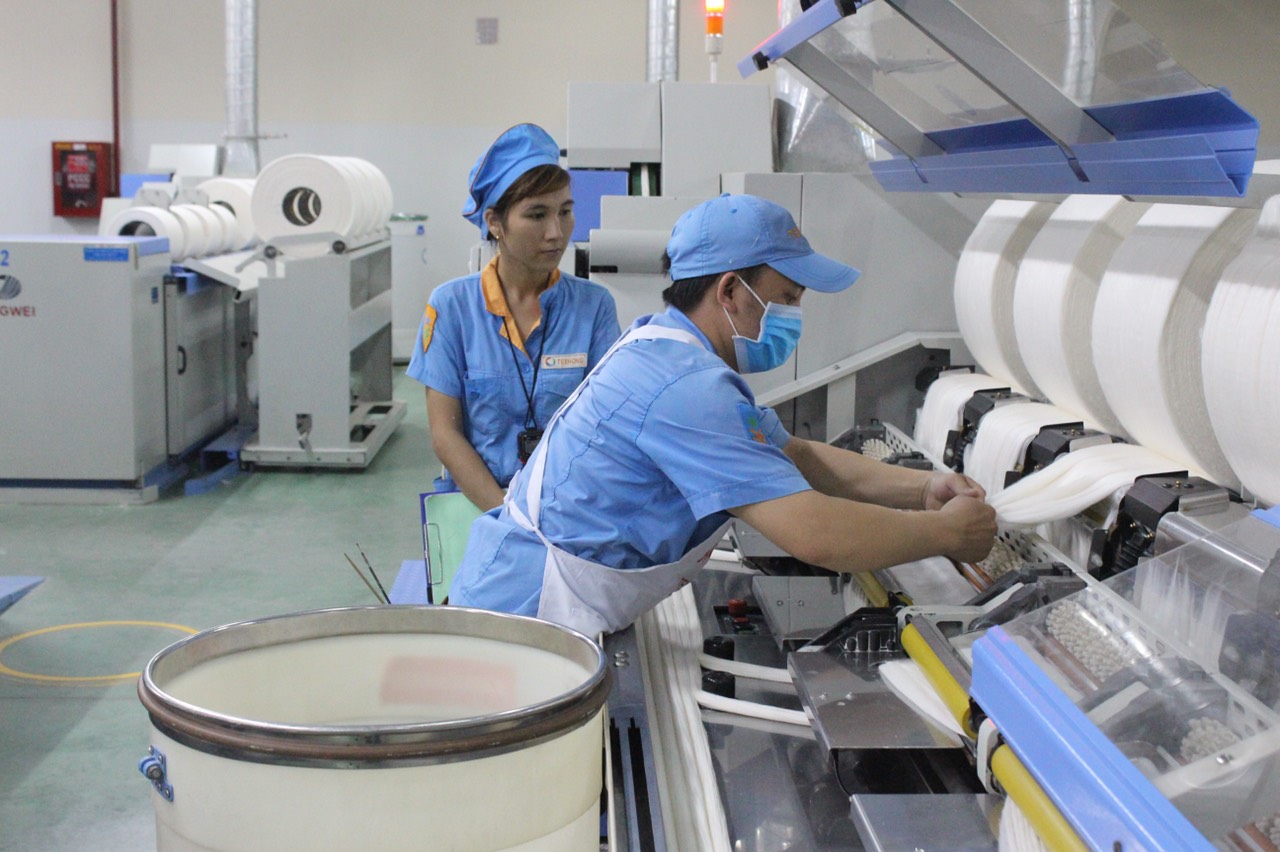
Yarn
production at Texhong Vietnam Textile
Joint Stock Company (Nhon Trach District)
Using local materials
From the position of a “big man” in the animal feed industry, in the 2000s, Cargill Vietnam Company Limited (Bien Hoa City) entered the field of agricultural product processing. At the beginning, the company used raw materials (soybeans, cocoa, coffee) imported from African and North American countries. Later, the Company cooperated with local farmers to develop cocoa and soybean planting projects. The Company provides technical support, seedlings, fertilizer and output to farmers at good prices. According to the company, this cooperation not only brings benefits to farmers, sustainable agricultural development, but also helps the company buy quality raw materials on the spot, reducing transportation costs and other expenses.
Regarding the clean production strategy and sustainable development, this Company aims to reduce greenhouse gas emissions from global supply chains by 30%, reduce waste generation and recycle and recycle packaging; support farmers to save irrigation water, produce and breed safely and effectively. Ms. Ruth Kimmelshue, Cargill's Sustainable Development Director, said: “Cargill continues to take decisive action towards achieving its sustainability goals. In particular, to renovate lines and technology to save fuel, use by-products from the agricultural product processing industry as raw materials for animal feed production; Collaborate with and help farmers develop agriculture to minimize climate impacts, regenerate land and improve water resource use”.
In operation since 2007, Texhong Renze Textile Joint Stock Company (belonging to Chinese Texhong Group) is changing in production and business strategy. Ms. Chau Ba Cam, General Director of the company, said that the company's main products are flexible fibers, bamboo incandescent fibers used in the textile and footwear industries. The Company’s annual average production output is about 450,000 spindles of all kinds, equivalent to about 300,000 tons, accounting for 40% of the country's yarn production. In order to implement a long-term development strategy, striving to become the leading textile enterprise in the country, the Company has been cooperating with domestic enterprises and suppliers of raw materials to increase the rate of localization, increase the ability to compete and enjoy preferences on the consumer market, and relevant taxes related to the origin of goods. Along with that is the development of new products to meet the market demand. Many enterprises in the textile, garment, footwear, wood, and other mechanical industries are also stepping up their search for domestically sourced raw materials. This is both an opportunity for farmers, small and medium-sized product suppliers to participate in the global value chain, while helping the “giants” to be proactive in the source of raw materials, reduce cost, increase the competitiveness, increase profits.
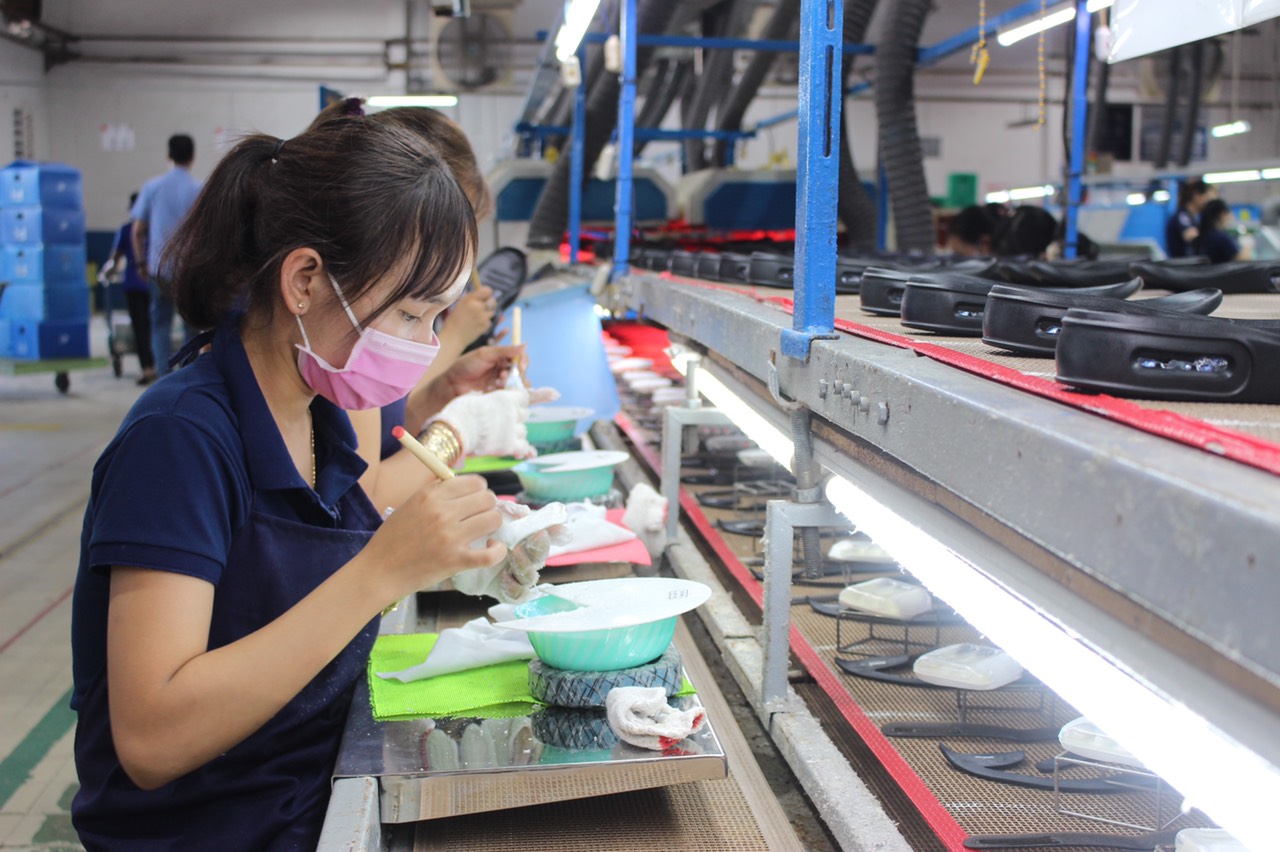
Sport
shoes production at Changshin Vietnam
Co., Ltd. (Vinh Cuu district)
Putting new technology into production
Towards the goal of clean production, the PPC has issued plans to assign departments, sectors, localities and the Management Board of industrial zones to implement, such as the Plan for cleaner industrial production with activities of propaganda, training, and support for enterprises to innovate and apply techniques to production, building technical infrastructure for clean production; Planning for economical and efficient use of energy.
According to the Department of Industry and Trade (DoIT), the support for enterprises to apply cleaner production, save energy has been implemented for many years and bring positive results in production. Typically: Bien Hoa Packaging Joint Stock Company, Tung Kuang Industrial Joint Stock Company; Meiwa Vietnam Company Limited, No. 7 Construction And Interior Decorating Company Limited, Phi Dung Company Limited, Dongnai Paint Corporation, Nam Long Company Limited, Techchem Resin Co., Ltd. Preliminary in the past 5 years, businesses have saved over 2.8 million kWh of electricity / year; about 312 tons of oil / year; hundreds of tons of gas and nearly 2.8 thousand tons of CO₂ emissions reduced into the environment.
In addition to the propaganda on energy saving efficiency, the DoIT also encourages businesses to install and use renewable energy such as rooftop solar power for industrial production and resell to the electricity industry; Supporting textile and garment enterprises to apply clean technology, environment-friendly technology to production, upgrade wastewater treatment systems,... contribute to reducing environmental pollution. Each year, the DoIT plans to support 3-5 enterprises to change production technology and apply cleaner production processes.
In the National Action Plan on Sustainable Production and Consumption up to 2020, with a vision to 2030, the DoIT sets a target to reduce 5-8% of the consumption of raw materials and fuels of the manufacturing industries (textiles, beverages, steel, plastic, chemicals, cement, beverage, and paper); 5-10 enterprises apply sustainable forms of production and consumption; 50% of industrial zones and clusters are disseminated, raising awareness about sustainable production and consumption.
According to Ms. Chau Ba Cam, General Director of Texhong Renze Textile Joint Stock Company, the application of new technology to production not only improves product quality, minimizes labor, costs on premises and workshops, but also arranges management in a scientific manner. In particular, it can solve the weaknesses of the textile and dyeing industry in terms of the environment by eliminating a large amount of emissions, wastewater and solid waste. In addition, new technology also helps businesses shorten most of the production time, thereby catching up with market trends, increasing product competitiveness, etc. Therefore, this business is and will promote the application of technology in production.
Changing machines, saving energy and using materials on the spot to reduce costs is inevitable and every business wants to do it. However, this depends on many factors such as time, funding, human resources and infrastructure for clean production. Therefore, many businesses wish to have standards on clean production, improve technical and legal infrastructure to feel secure in investing in clean production.
Mr. Le Van Danh, Deputy Head of Dong Nai Industrial Zones Authority, said that since 2006, the PPC has issued regulations in attracting investment projects in Dong Nai that must have modern technology, friendly with the environment. Projects that are polluted, with a high risk of pollution, are rejected. Currently, the province is encouraging enterprises operating for a long time to renew production lines and technologies to limit the impact of the water and air environment; link with domestic enterprises to purchase raw materials, develop supporting industries; Priority is given to attracting businesses using high technology and a history of good compliance with environmental regulations.
Newer articles
Older articles
Today
Total

