To ensure sustainable socio-economic development, many years ago, the province has a policy to set up industrial clusters (ICs) and set out a roadmap requiring small and potentially polluting establishments to enter in ICs.
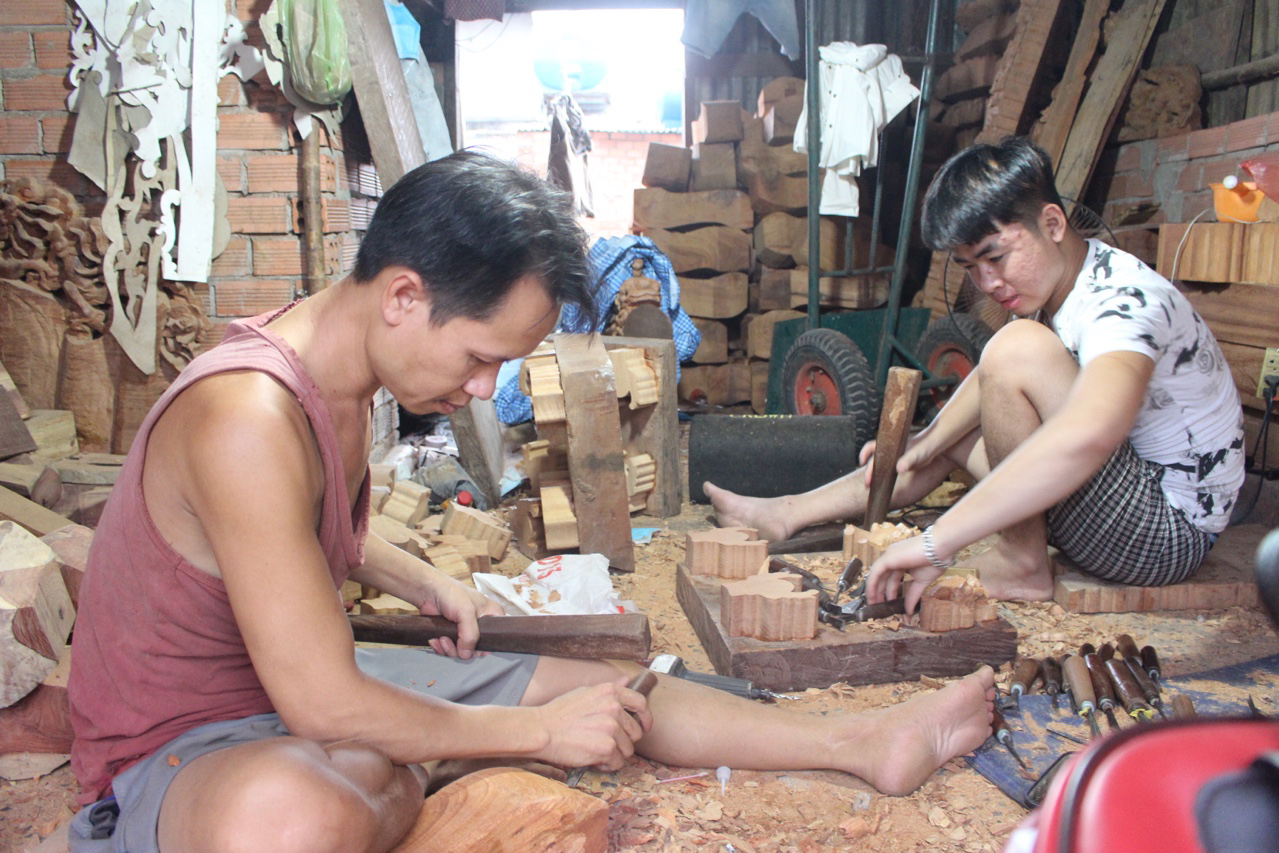
Carpentry factory in Tan Hoa Ward, Bien
Hoa City
While small production establishments with negative impacts on the environment have not been relocated as required, in many residential areas, new establishments are still sprouting up, causing frustration for local people.
Many environmental non-compliance establishments
Recently, many people in Group 27, Quarter 3A, Trang Dai Ward (Bien Hoa City) have reflected that an ice production facility - which is owned by Mr. L.H. - with a variety of machines that made noise and cracked people's houses. This frustration has been reflected many times to the Ward’s People's Committee and the City government.
According to Mr. Nguyen Van Tuong, Vice Chairman of the People's Committee of Trang Dai Ward, the aforementioned ice facility has a business license and comes into operation from the end of 2019 with a scale of about 1.5 tons of ice per day. After receiving the citizen's feedback and opinions at the meetings with voters, ward leaders sent officers three times to check, make minutes and request the said establishment owner to surmount the vibration and noise. The functional departments of the city also sent officials to work and require this facility to surmount its odors and noise, but so far it has not been much improved. Also in Trang Dai Ward, in the past few years, many establishments have appeared with all kinds of industries that cause troubles for people.
Trang Bom district is the place to develop carpentry and handicrafts of the province with about 300 establishments concentrated in Binh Minh, Quang Tien, Bac Son, Song Trau and Ho Nai 3 communes. Some establishments have scale, create many jobs for local workers, products are exported to foreign countries and bring in great revenue. But most of them are still on household scale and do not meet environmental criteria, causing noise and dust.
Leader’s representative of Trang Bom district said that when the authorities noticed this, they petitioned and approved by the Provincial People's Committee to build a wooden handicraft cluster in Binh Minh commune. The province supports 60% of the total investment cost of the project, the rest Trang Bom district pays in advance to the investor, then withdraws from the facilities into the cluster. This wooden handicraft cluster is expected to create conditions for the development of traditional handicrafts of the district, overcoming environmental pollution in the residential area. Nearly 20 establishments and enterprises producing fine-art wood in the district have registered to join such cluster, but up to now, the wood-art craft cluster is still leveling and building technical infrastructure.
According to statistics of the Department of Natural Resources and Environment (DONRE), in areas such as Tan Bien, Ho Nai, Hoa An (Bien Hoa City); Binh Minh, Song Trau, Ho Nai 3, Quang Tien (Trang Bom District), etc., there are many household-based establishments that combine large production. Every day, many production facilities pollute the air and water sources, causing excessive noise. For example, Tan Hoa Ward (Bien Hoa City) has more than 100 furniture manufacturers in the residential area that have caused dust, and people have repeatedly reported to authorities. Many measures are introduced such as: movement to surmount, requirement to ensure environmental conditions, sanctions,…; However, the number of seriously implemented establishments is only a very small percentage.
Speeding up the implementation of IC infrastructure
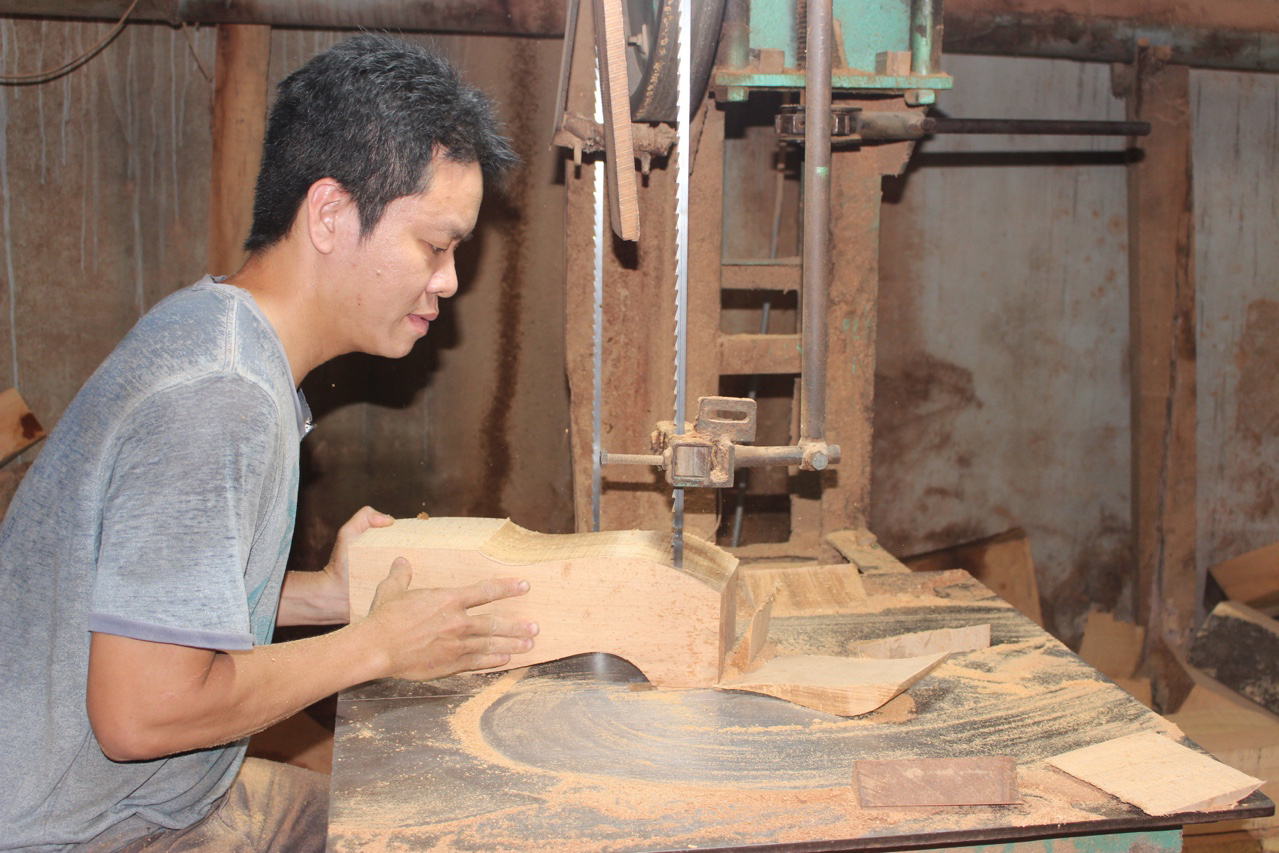
Carpentry factory in Tan Hoa Ward, Bien
Hoa City
The policy of developing industrial clusters and bringing small production establishments into the cluster is the right direction, with the aim of minimizing the risk of environmental pollution in residential areas. However, up to now, most industrial clusters in localities have been slow to deploy.
Deputy Director of DONRE Nguyen Ngoc Thuong said that most industrial clusters in this province are slow to progress and difficult to attract businesses into operation. Specifically, according to the plan, the province has 27 industrial clusters in districts and cities with a total area of nearly 1.5 thousand hectares. Up to now, there are 4 clusters that have deployed infrastructure and are relatively complete, 3 clusters are under construction of infrastructure, 1 cluster has completed compensation, 15 clusters are implementing compensation and clearance procedures, 2 clusters have registered enterprises but have not invested yet, and 2 clusters have not had investors. Out of 27 industrial complexes, 14 industrial clusters had new enterprises operating but only 9 industrial clusters carried out environmental procedures. Mr. Thuong said that the DONRE of localities must urge the investors to complete the infrastructure of industrial complexes, make preferential policies and support for establishments and enterprises entering the operation cluster. The DONRE will require infrastructure investors to set up environmental procedures, invest in environmental protection works and items according to regulations.
According to the leaders of DONRE, the simplification of business registration and licensing has created advantages for businesses, but also leads to a corollary that is easy to form production facilities that pollute the environment in the residential area. In addition, the post-check work with facilities causing environmental pollution has not been strictly implemented by the authorities and local authorities. Meanwhile, the violating establishments are increasingly sophisticated, having coping behaviors such as operating at night, not complying with the sanction decision, changing the name of the business, moving to another location.
The DONRE said that in order to minimize environmental pollution in residential areas, in addition to investing in industrial clusters and relocating at-risk facilities to concentrated production places, it is necessary to "tighten" the conditions for business registration licensing; strengthen inspection and supervision. In addition, the province and district government should have financial support for small-scale establishments to change its equipment, environmentally friendly production technology, change occupations or soon relocate into ICs.
Anh Quan
Newer articles
Older articles
Today
Total

