Proposing to narrow down the lockdown areas of Covid-19
- Monday - 27/09/2021 16:23
- Close page
According to CDC (Center for Disease Control) of Dong Nai Province, currently, some areas still have outbreaks in the province that need to continue to be lockdowned, including: Ong Huong Hamlet, Thien Tan Commune and Hamlet No. 1, Hamlet No. 5, Thanh Phu Commune (Vinh Cuu District); Residential Quarter No. 4A, Residential Quarter No. 4B, Residential Quarter No. 4C and Residential Quarter No. 3A of Trang Dai Ward; Residential Quarter No. 6 and Residential Quarter No. 8 of Long Binh Ward; Long Diem Residential Quarter, Binh Duong Residential Quarter and Thai Hoa Residential Quarter of Long Binh Tan Ward; An Hoa Residential Quarter, Cau Hang Residential Quarter and Dong Nai Residential Quarter of Hoa An Ward; Residential Quarter No. 8 and Residential Quarter No. 12 of Ho Nai Ward; Residential Quarter No. 9, Residential Quarter No. 8A and Residential Quarter No. 8B of Tan Bien Ward; Residential Quarter No. 4 of Tan Hoa Ward (Bien Hoa City); Ngu Phuc Hamlet, Dong Hai Hamlet, Lo Duc Hamlet, Thanh Hoa Hamlet (Ho Nai III Commune); Song May Hamlet, An Chu Hamlet, Phu Son Hamlet (Bac Son Commune) of Trang Bom District; the whole Hiep Phuoc Townlet, Ben San Hamlet, Ben Cam Hamlet (Nhon Trach District) and Hamlet No. 1, Phu Ngoc Commune (Dinh Quan District).
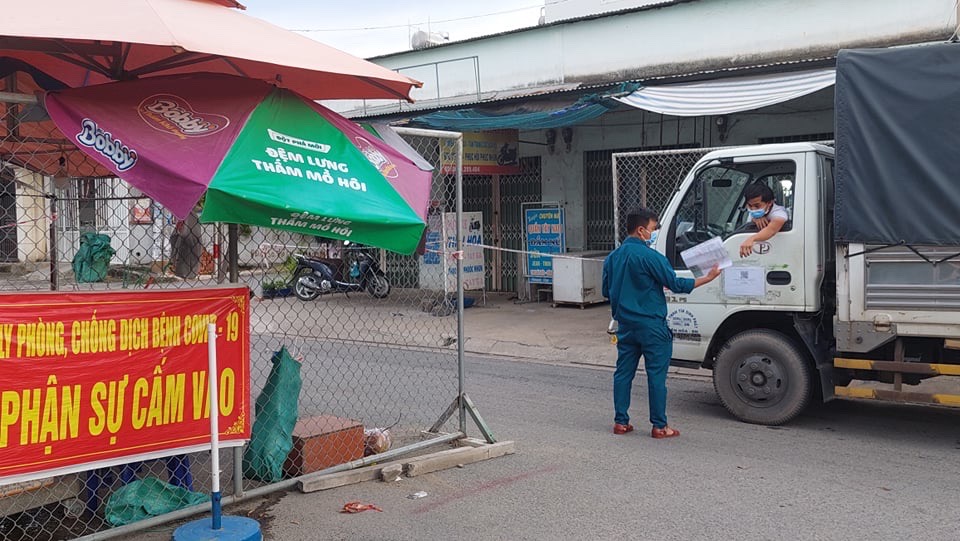
The authorized forces check the road permits and control people entering the Trang Dai Ward, Bien Hoa City.
Facing the above situation, the CDC of Dong Nai Province has just sent an urgent document to the Steering Committee for the Covid-19 prevention and control, Medical Centers of districts and cities in the province on requesting to review the organization of narrow lockdown of the Covid-19 outbreaks in the areas of districts and cities.
According to the CDC of Dong Nai Province, after implementing the provincial large-scale testing plan and the additional large-scale testing plan, the CDC of Dong Nai Province assessed that the whole province has basically controlled the community infection. Most of the old outbreaks have been shrunk to a residential cluster, a hostel and some neighboring households, interspersed in the hostel or to the scale of hamlet or residential quarter. Some of the newly discovered outbreaks in the community are due to cases of infection returning to or from the epidemic areas and the cases missed during the large-scale testing, most of these outbreaks have a narrow range of infection.
Therefore, the CDC of Dong Nai Province believes that extending the large-scale lockdown of the whole commune and ward to this time is no longer appropriate because the households in the lockdown areas have basically cleaned up the source of infection but still lockdowned together with outbreaks will increase the risk of infection. Widespread lockdowns will add to the burden of unnecessary screening. In fact, the widespread lockdown only helps to manage people entering and leaving the lockdown areas well, making it difficult to strictly manage the contacts outside the lockdown areas. The large lockdown areas requires a lot of controlling and serving forces, and the provision of essential services in the lockdown areas also face many difficulties.
The CDC of Dong Nai Province asked the Steering Committees for the Epidemic Prevention and Control of districts and cities to direct the Health Centers and Health Stations coordinating with the Steering Committees for the Epidemic Prevention and Control of communes, wards and townlets in the area to review the still remaining old outbreaks through rounds of testing, the newly discovered outbreaks in order to assess the risk of infection at the each outbreak. On that basis, it is suggested that the areas need to continue the lockdown.
Organizing the narrow lockdown according to the scale of each outbreak. The scope of the lockdown is an area with positive cases and at risk of infection such as a residential cluster, a hostel or a hostel area and households in the vicinity of the hostel area. Only hamlets, residential quarters or communes and wards with many outbreaks, many hostels with positive cases and not yet traced, controlled well the source of infection can implement the lockdown of the whole hamlet or the whole commune.
To arrange the forces to strictly control the lockdown areas, both for people entering and leaving the lockdown areas ensures the implementation of the isolation of people from people, houses from houses in the lockdown areas. It organizes the supply of suitable goods, minimizes movement and contact in the lockdown areas.
Continuing to carry out the rapid tracing for new lockdwon areas and outbreaks that have not controlled the source of infection.
Carrying out the testing to clean up the sources of infection by the rapid test and RT-PCR (Real Time - Polymerase Chain Reaction) test for 100% of people in the lockdown areas every 2-3 days per day until there are no more positive cases. Then, continuing the lockdown for additional 14 days and testing on the 7th and 14th day since the testing did not have the positive cases. Quickly put the F0 and F1 cases into the quarantine areas if any. Implement a distance between a number of hostels with Covid-19 cases and a high density of people staying at the hostels. To manage the implementation of the 5K principles at the hostels. Prioritizing vaccination for people 18 years of age or older living in the lockdown areas and hostels immediately after they have the negative test results for the Covid-19.
Viet Anh